









Glossary

Biopsy—Removal and microscopic examination of tissue from the body for the purpose of establishing a precise diagnosis. Excisional biopsy is removal of a skin lesion for microscopic examination. Incisional biopsy is removal of a portion of a skin lesion.

Basal cell carcinoma – a malignant tumor that arises in the basal cells of the epidermis. Basal cell carcinoma can be locally invasive, but seldom metastasizes.

Chemotherapy – the use of anti-cancer drugs to kill cancer cells that survive surgery or can't be reached by surgery. Chemotherapy also may be used in late stages of cancer to reduce the size of a tumor.

Clark Level of Invasion – The method described by Dr. Wallace Clark for measuring the penetration of a primary melanoma into the skin by anatomic layer. Level I refers to melanomas confined to the outermost layer of the skin called the epidermis. (Another term for Level I melanoma is "melanoma in-situ".) Levels II-IV refers to different degrees of penetration into the second layer of the skin called the dermis. Level V refers to penetration into the third "fatty" layer of the skin called the subcutis.

Clinical trial—investigational studies of new treatments, new uses of existing treatment, or new screening methods to detect disease.

Cytokines – proteins produced naturally in the body, where they act as "messengers" to initiate inflammatory and disease-fighting responses to viruses, bacteria, toxins, injury, and malignant processes. Cytokines are in use as anti-cancer drugs.

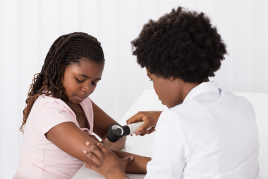
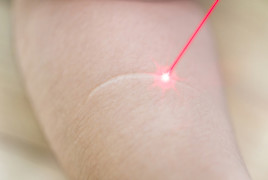
Dermatoscopy (surface microscopy)—Also known as dermatoscopy, dermoscopy, and epiluminescence microscopy. A noninvasive technique for examining a pigmented or nonpigmented lesion to assess anatomic structures that are not visible to the unaided eye. Surface microscopy may be done with the lesion covered with mineral oil, or with the lesion dry. When done with mineral oil, the oil is used to coat the lesion, then the lesion is examined with magnification (hand lens, dermatoscope, or computerized digital imaging.) Surface microscopy complements other diagnostic techniques and may help determine which skin lesions require biopsy or removal.

Dysplastic—alteration in size, shape and organization of cells. A dysplastic nevus is unusual-looking because of its size (5 millimeters diameter or larger), and irregular, non-uniform, and/or very dark pigmentation, with or without indistinct or irregular margins.

Informed consent—the process by which a volunteer for a clinical trial agrees to participate after being fully informed regarding purposes of the trial, risks and benefits associated with participation in the trial, and whether volunteers will be randomized to receive treatment or placebo.

Interferons – A family of disease-fighting molecules produced naturally in the body, but also made in the laboratory as drugs to enhance the body's ability to destroy viruses and cancer cells. 

Interferon—a cytokine (see above in Glossary) used in anti-cancer and anti-viral therapy to halt or slow proliferation of cancer cells or viruses. Interferon is sometimes used in combination with chemotherapy.

Level – See Clark Level of Invasion

Malignant – when referring to cancer, malignant means the ability to grow and spread in an uncontrolled manner beyond the local confines of the tumor.

Margin – in skin cancer surgery, the amount of normal-appearing tissue removed around the tumor. Margin is usually measured in centimeters. Current recommendations for surgical margin:

Tumor Thickness (millimeters) 

In situ melanoma
less than 1.0
1.0-4.0
more than 4.0

Excisional Margin (centimeters)

  0.5
  1.0
  2.0
  at least 2.0

Surgical margin may be modified in individual patients for medical or esthetic reasons. The main goal is complete removal of the melanoma.

See Thickness for a discussion of the relationship between tumor thickness and 5-year survival after treatment. 

Melanocytes – cells that make the skin pigment melanin. Melanin is made in small granules, called melanosomes, within the melanocyte. Melanin is then transported to cells of the outer skin (keratinocytes), where the melanin is seen as "color" of the skin.

Melanoma –- a tumor that arises in melanocytes. Types of melanoma include:

  • Acral-lentiginous (uncommon overall, but the most common melanoma in dark-skinned people. It appears particularly on palms and fingers of the hand, fingernails and toenails, and soles and toes of the feet). This tumor comprises two percent of melanomas in Caucasians, and 50% in dark skinned races. This tumor is biologically very aggressive.
     

  • Amelanotic melanoma (an uncommon subtype that does not produce enough pigment to have the color of a pigmented lesion. It may be skin-colored or slightly reddish like an insect bite). It usually appears as a pink or red nodule.
     

  • Desmoplastic neurotrophic melanoma (an uncommon subtype that may look like a non-pigmented scar-like lesion. DNM may be suspected if a lesion like a scar or keloid is found, and persists, at a site when no injury occurred to cause a scar). This lesion may also be mistaken for a cyst. It may be pigmented or non-pigmented. It most commonly appears on sun-damaged skin of the head and neck in elderly adults.
     

  • Lentigo-maligna (occurs most often on sun-exposed skin, often beginning as a mottled patch of pigmentation).
     

  • Mucosal melanoma (an uncommon subtype that occurs in mucosal regions of the mouth, nose and genitals. MM may not be recognized because it occurs in sites that are infrequently examined).
     

  • Nodular (tends to grow "down" into deeper skin tissue rather than along the surface of the skin. A very aggressive form of melanoma). This tumor represents 10-30% of melanoma cases.
     

  • Superficial spreading melanoma (the most common type of melanoma. It usually grows "sideways" along the skin surface (epidermis), then "down" into deeper skin tissue (dermis). This form of melanoma is curable when it is removed before invasion into the dermis. This tumor comprises at least 50-60% of cases.

Metastasis – the spreading of disease from one part of the body to another part. Melanoma metastasizes most often to lymph nodes, liver, abdomen, lungs, bone, skin, heart, and brain.

Mohs micrographic surgeryA technique for taking excisions from a known or suspected tumor, and examining the tissue in frozen or fixed section under a microscope to make certain the tumor is completely removed.

Monoclonal antibodies – laboratory-produced molecules that can be directed to "lock on" to specific cells, parts of cells, or other molecules, either to identify them for diagnostic purposes or to kill them in therapy. Monoclonal antibodies are still experimental in many instances.

Mole (see nevus)

Placebo—a pharmacologically inactive substance with no medicinal value, used as method for "control" in clinical trials.

Precursor—a lesion that has the potential to develop into a melanoma. Precursor lesions include dysplastic nevi, benign compound nevi, small and large congenital nevomelanocytic nevi, and lentigo maligna.

Nevus (plural nevi) – a lesion of the skin that may be present from birth, but most often appearing later in life. By three years of age, 40% of children will have at least one nevus. Some varieties of nevi are hereditary – that is, they "run in the family". Most nevi are pigmented, but some are not. A common nevus in light-skinned people (usually called a mole) is typically small, round, tan or brown, with a smooth border, and exactly the same throughout. The brown color in the nevus is melanin. Other types of moles may be very large, or have irregular borders. There are dozens of different types of nevi, of many shapes, colors and sizes. While most nevi are benign, malignant changes can occur to turn the benign nevus into a melanoma. (Click on View Moles to view photographs of normal moles).

Risk Factor—a personal attribute that correlates with an increased risk for developing skin cancer. Risk factors include white skin with blond or red hair, blue, gray or green eyes, tendency to freckle, tendency to sunburn rather than tan, atypical (dysplastic) moles, family or personal history of melanoma, a large number of acquired moles, and a large or small congenital mole.

Sentinel node biopsy and lymphatic mapping – a technique for (1) using radioisotopes, and sometimes blue dye, to trace the flow of lymph from a melanoma site to the nearest lymph nodes, (2) identifying the "sentinel node" that first receives lymph drainage from the melanoma site, and (3) conducting a biopsy of the sentinel node. If the sentinel node is "negative" (no melanoma cells), there is a high certainty that no cancer cells have passed through the sentinel node to other nodes in the lymph drainage basin. If melanoma cells are found in the sentinel node, wide dissection of nodes is carried out as a therapeutic measure. It is currently debatable whether removing cancerous lymph nodes prolongs survival.

Squamous-cell carcinoma – a skin cancer that forms in the flat, scale-like skin cells of the epidermis called squamous cells. This cancer can metastasize and cause death.

Stage – Cancer staging systems are designed to correlate with prognosis (i.e., risk of recurrence or death.) The staging system for melanoma has changed repeatedly over the years and continues to evolve. The intricacies and changing nature of melanoma staging can be quite confusing.

Stage I - melanoma clinically confined to the skin
Stage II - evidence of spreading to the lymph nodes
Stage III - evidence of spreading beyond the lymph nodes

More recent staging systems include four Stages:
Stage I - thinner melanomas confined to the skin
Stage II - thicker melanomas confined to the skin
Stage III - evidence of spreading to the lymph nodes
Stage IV - evidence of spreading beyond the lymph nodes
The higher the stage, the greater the risk of fatal outcome.

Thickness – the thickness of a melanoma (how deeply the tumor extends into the skin) has been related to 5-year survival after surgical removal of the tumor. A physician named Alexander Breslow made this observation in 1975, and the relationship between tumor thickness and 5-year survival has been documented to be valid in years since:

Breslow Thickness (millimeters)

less than 0.76
0.76-1.50
1.51-2.50
2.51-4.0
4.1-8.0
more than 8.0

5-Year Survival (%)

97
92
76
62
52
32

Survival rates, like insurance survival tables, are statistical aggregates. Please keep in mind, it is impossible to determine survival for an individual patient.

See Margin for a discussion of the relationship between tumor thickness and the amount of tumor-free tissue that is removed around the tumor site at the time of surgical excision.

MelanomaNet Update  |  Basic Facts  |  Skin Lesions  |  Who is at Risk?  |  Self Examination
Medical Diagnosis  |  Treatment  |  Prevention  |  Tell Us About Yourself
SkinCarePhysicians.com  |  Glossary  |  Contact Us  |  Home

© American Academy of Dermatology, 2002.  All rights reserved.
Produced by NetOn-Line Services.

Privacy Policy