








Phototherapy

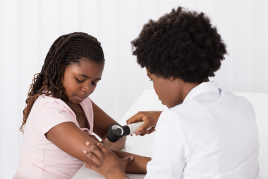
When patients have psoriasis that does not respond to topical medications alone or have lesions that are too extensive for topical treatment, phototherapy becomes an option. During phototherapy, the patient’s skin or just the lesions are exposed to ultraviolet light. Patients usually receive treatment in a dermatologist’s office or psoriasis clinic. The types of phototherapy used to treat psoriasis, include:

Excimer Laser
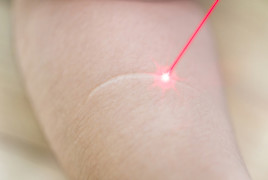
The excimer laser is effective in treating limited plaque psoriasis and offers two distinct advantages over other forms of phototherapy. First, dermatologists can target the laser to treat only the psoriatic lesion, which eliminates possible damage to surrounding unaffected skin. Secondly, since only the lesions are treated, significantly higher doses of light can be used, and higher doses allow for fewer treatment sessions.

Approved by the U.S. Food and Drug Administration (FDA) for the treatment of mild to moderate plaque psoriasis, the excimer laser delivers high-intensity wavelengths of UVB to the targeted plaques. Each treatment session typically lasts a few minutes, and treatments are usually given twice a week. On average, 8 to 10 sessions are needed to achieve near clearance.

Patients considering laser treatment should know that many states do not distinguish who can and cannot perform procedures with laser and light sources. Since skin treatments using lasers carry potential side effects, they should be performed by a board-certified dermatologist or under direct physician supervision.

How it works: The ultraviolet (UV) light produced by excimer lasers induces biologic reactions in the skin’s cells that decrease the number of skin cells that grow too quickly and reduce inflammation.

Advantages
  • Well-tolerated
  • See results quickly, sometimes in 2 weeks
  • Fewer treatment sessions and shorter treatment time than with traditional UV therapy
  • Does not damage surrounding healthy skin
  • Effective on treatment-resistant lesions, such as those that frequently occur on the elbows and knees
  • Most side effects mild: redness, blistering, erosion
Disadvantages
  • Cannot treat entire body
  • Treatment may be painful
  • Darkening of the skin can occur
  • Scarring possible

Psoralen + Ultraviolet Light A (PUVA)
Also known as photochemotherapy, PUVA is effective in patients with plaque, guttate and palmar-plantar psoriasis and offers long-lasting clearance to many who respond. Treatment requires the patient to ingest, topically apply, or bathe in a medication called (psoralen) before being exposed to UVA rays. Psoralen makes the skin more sensitive to UVA rays. After treatment, patients must wear UVA blocking sunglasses for the rest of the day when exposed to sunlight because psoralen remains in the eyes for awhile.

About 25 treatments within 2 to 3 months are needed before clearing occurs. Usually, 30 to 40 treatments per year will keep psoriasis under control once it has cleared. Patients undergoing PUVA treatment must be carefully monitored by dermatologists and staff.

Due to the inconvenience and side effects, PUVA is usually reserved for patients whose psoriasis has not responded to other treatments or have widespread lesions.

How it works: Combining the photosensitizing agent (psoralen) and UVA slows the rapid growth of skin cells and kills T cells in the skin.

Advantages
  • Offers long-lasting remission
  • Effective in 85 to 90% of patients
Disadvantages
  • Requires numerous treatments in medical office or clinic
  • Patients must wear UVA-blocking sunglasses when exposed to sunlight after treatment
  • Increased risk of skin aging, freckling and skin cancer with long-term treatment
  • Side effects may include nausea, headache, fatigue, burning skin, itching and irregular skin pigmentation

Ultraviolet B (UVB) Phototherapy
UVB phototherapy is highly effective in patients who have moderate to severe psoriasis and thin plaques. Patients usually receive between 2 and 5 treatments per week. During treatment, the skin is exposed to UVB, which is generated from a special lamp or laser. To enhance penetration of UVB rays, an emollient is usually applied before exposure. UVB phototherapy may be combined with another psoriasis therapy, such as calcipotriene, tazarotene, anthralin or coal tar to increase effectiveness. UVB phototherapy proves to have few side effects. There are 2 types of UVB phototherapy:

  • Broadband (3-5 treatments per week)
  • Narrowband (2-3 treatments per week)

Broadband. This UVB therapy has been around for more than 80 years, and it is still highly effective. The biggest drawbacks are that the patient must travel between 3 and 5 times per week to a site that offers this therapy and that broadband light does not reach the scalp and areas where skin folds occur.

Narrowband. This newer form of UVB therapy is called “narrowband” because it emits a narrower band of UVB wavelengths. Narrowband UVB therapy is proving to be more effective than the traditional broadband therapy. However, it does have the potential to produce severe burning. Like broadband, it is still not known if narrowband UVB therapy poses a long-term risk for development of skin cancer.

How it works: Ultraviolet (UV) light induces biologic reactions in the skin’s cells that decrease the number of skin cells that grow too quickly and kills T cells in the skin, which can result in the clearing of psoriatic lesions.

Advantages
  • Highly effective
  • Few side effects
Disadvantages
  • Requires 2 – 5 weekly visits to a clinic or medical office until lesions clear
  • May require follow-up treatments once lesions clear
  • Long-term treatment may increase risk of developing skin cancer

References
Gribetz, C. et al. “Clearing Psoriasis: A New Era of Optimism.” Contemporary Dermatology 2003: Vol. 1, No. 1: 1-8.

More Information
Topical Preparations
Covers topical medications, moisturizers and agents that remove excess scale.

Systemic Medications
Information about FDA-approved systemic medications used to treat psoriasis.

Other Systemic Medications
Research shows these drugs, which received FDA approval for treating other conditions, may also be effective in clearing psoriasis.

AAD Consensus Statement on Psoriasis Therapy
Table lists the treatments contained in the consensus statement developed by leading dermatologists and other experts.


This information sponsored by an unrestricted educational grant from Amgen, Inc.


PsoriasisNet has been awarded the Standard of Excellence WebAward
in the 2004 WebAward Competition hosted by the Web Marketing Association.

© American Academy of Dermatology, 2003.  All rights reserved.

Privacy Policy