





| |
Acne
Skin Care Guidelines
Good skin care plays an important role
in treating acne. Following these skin care guidelines — unless your
dermatologist instructs otherwise — can help improve your results:
Gently Cleanse Acne-prone
Skin
-
Limit washing to twice a day – and
after perspiring. Once in the morning and once at night as well
as after perspiring heavily should be the limit. Perspiration,
especially when wearing a hat or helmet, can make acne worse, so the
skin should be gently cleansed as quickly as possible after
perspiring.
-
Use a gentle, non-abrasive cleanser.
Wash the face and other acne-prone areas with a gentle, non-abrasive
cleanser that does not contain alcohol.
-
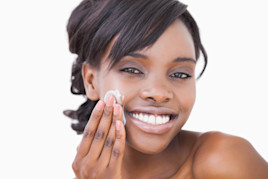
Use your fingertips. Apply the
cleanser and wash with your fingertips. This reduces skin
irritation. Using a washcloth, mesh sponge, or anything else can
irritate the skin and lead to breakouts.
-
Never scrub the skin. Scrubbing
the skin clean does not clear acne. In fact, scrubbing irritates the
skin and can make acne worse.
-
Rinse with lukewarm water. Be
sure to thoroughly rinse away the cleanser with lukewarm, not hot,
water.
-
Shampoo regularly. If you have
oily hair, shampoo daily.
Avoid Acne Skin Care Taboos
Astringents, rubbing alcohol, and tanning do not help clear acne nor
keep acne-prone skin free from blemishes. Dermatologists recommend
that their patients with acne and acne-prone skin avoid the
following:
-
Astringents, exfoliators, masks, and
toners. These products do not help clear acne. In fact, these
can aggravate the skin and make acne worse. These products also may
make it more difficult to tolerate prescription acne medications, so
it is best not to use these when treating acne.
-
Greasy hair-care products. Oily
hair-care products, such as oil-containing gels and pomades, can
drip onto the skin and clog pores. This can cause acne.
-
Picking, popping, and squeezing
pimples. People pick and pop pimples to get rid of them quickly.
The truth is this prolongs healing time and increases the risk of
scarring.
-
Rubbing alcohol. Some people
apply rubbing alcohol in order to dry out the oily skin. This will
not help clear acne nor prevent breakouts. It can irritate the skin
and cause breakouts.
-
Tanning.
Some
people claim that their acne clears with sun exposure. The truth is
that tanning does not clear acne. Tanning, however, does increase
one’s risk of developing melanoma and other skin cancers.
Select “Noncomedogenic” Cosmetics
and Skin Care Products
Many acne patients are surprised to learn that makeup, moisturizers,
and sunscreen are okay to use while treating acne. The key is to
select products labeled “noncomedogenic.” This means the product
does not clog pores. Just because a product says “noncomedogenic”
does not mean that it works for everyone. You may have to experiment
with different noncomedogenic products before you find one that
works for you.
Makeup. The truth is makeup can
be worn when treating acne — even when using topical medications.
Just be sure to follow these guidelines:
-
Choose oil-free cosmetics that are
labeled “noncomedogenic” (won’t clog pores).
-
Apply makeup after applying acne
medication.
-
If you have trouble finding makeup that
can be used with acne medication, consult a dermatologist.
Moisturizer. Did you know that
moisturizer can help calm irritated acne-prone skin? If your skin
feels dry and you want to moisturize, follow these guidelines:
-
Use a moisturizer that is oil-free and
says “noncomedogenic” (won’t clog pores).
-
If you use a topical acne medication,
apply the moisturizer after applying the acne medication. If your
skin still feels dry or stings, try applying the moisturizer before
applying the acne medication.
Practice Sun Protection
Dermatologists recommend sun protection, which includes but is not
limited to regular use of sunscreen, for all their patients,
including those with acne. Research shows that most cases of skin
cancer can be prevented with sun protection. Sun protection also can
help prevent sunburn in patients using topical retinoids, which
increase the skin’s sensitivity to the sun.
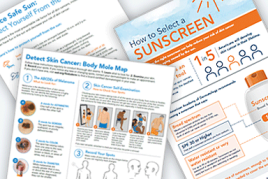
The American Academy of Dermatology recommends that everyone protect
their skin by following these sun-protection practices:
-
Generously apply sunscreen to
all exposed skin. Use a sunscreen that has a Sun Protection Factor
(SPF) of at least 15 and provides broad-spectrum protection from
both ultraviolet A (UVA) and ultraviolet B (UVB) rays. Re-apply
every two hours, even on cloudy days, and after swimming or
perspiring.
People with acne or acne-prone skin should use a sunscreen labeled
“noncomedogenic” (does not clog pores) and apply it after applying
topical acne medication.
-
Wear protective clothing, such
as a long-sleeved shirt, pants, a wide-brimmed hat, and sunglasses,
where possible.
-
Seek shade when appropriate,
remembering that the sun’s rays are strongest between 10 a.m. and 4
p.m.
-
Use extra caution near water, snow,
and sand as they reflect the damaging rays of the sun, which can
increase your chance of sunburn.
-
Get vitamin D safely through a
healthy diet that includes vitamin supplements. Don’t seek the sun.
-
Avoid tanning beds. Ultraviolet
light from the sun and tanning beds causes skin cancer and
wrinkling. If you want to look like you’ve been in the sun, consider
using a sunless self-tanning product, but continue to use sunscreen
with it.
-
Check your birthday suit on your
birthday. If you notice anything changing, growing, or bleeding
on your skin, see a dermatologist. Skin cancer is very treatable
when caught early.
Shave with
Care
Men know that shaving when you have acne can be a challenge. Here
are some dermatologists’ tips that can help give you a clean shave.
-
Before shaving, soften the hairs.
Wetting the face thoroughly with lukewarm water can help soften the
hairs.
-
Experiment. Try shaving with
electric and safety razors to see which works best for you.
-
Make sure the blade is sharp.
This helps prevents nicks from a safety razor, which can irritate
the skin and lead to breakouts.
-
Shave lightly. This can help
avoid nicking acne lesions, which can make acne worse.
-
Never try to shave off the acne.
This aggravates the condition and makes the acne worse.
If after following these guidelines,
you are not satisfied with the results, be sure to see a
dermatologist. Today, virtually every case of acne can be
effectively treated.


All
content solely developed by the American Academy of Dermatology |
 |
 |
|
Acne medications should be
used as directed. Using more than directed will
not improve results. In fact, this can aggravate
the skin and make acne worse.
For more information about
using acne medication, see
Psst...Topical Acne Medication Can Clear Acne. |
|
|
|