






| |
AcneNet Spotlight Article
Adult Acne: Effective Treatment
Available
While it may seem
that nothing will clear a case of adult acne, the fact is that
treatment can be effective. Often combination therapy (the use of
two or more treatments), a dermatologist’s help, and a bit of
patience are required.
The following describes treatment that can be effective for adult
acne.
Topical Therapy
Topical treatment for acne includes creams, lotions, gels, and
solutions. A topical medication that combines benzoyl peroxide
and a topical antimicrobial such as clindamycin or
erythromycin can be effective for adults with mild to moderate acne.
Combining topical clindamycin with a retinoid also can be effective.
These products require a prescription. An over-the-counter product
that contains sodium sulfacetamide and sulfur helps
some adults.
A topical retinoid is often used to treat the small bumps
under the skin and blackheads. Some are available over-the-counter.
The more effective ones require a prescription. Retinoids are the
only medication believed effective for battling the microcomedone —
the lesion that precedes acne.
While some patients shy away from using a topical retinoid because
of the product’s reputation for irritating the skin, newer
formulations are available that cause significantly less irritation.
When using a retinoid, dermatologists recommend that patients apply
sunscreen daily before going outdoors. A topical retinoid increases
the risk of sunburn. An added benefit of using a topical retinoid is
the product’s ability to reduce fine lines and wrinkles.
Acne-fighting cosmetics. Over-the-counter acne treatment for
women is one of the fastest growing areas of skin care product
development. Tried-and-true acne-fighting ingredients such as
salicylic acid are finding their way into facial moisturizers and
foundations. While the active ingredients are the same as those
available in products tailored for teens, the products formulated
for women are less drying. Many of these products include anti-aging
ingredients.
While this may sound very promising, the active ingredients approved
for over-the-counter products may not effectively control adult
acne.
Oral Medications
As adult acne often involves hormonal swings, an oral medication may
be necessary to minimize these fluctuations and control the acne.
Medications that can minimize hormonal fluctuations in women include
some oral contraceptive pills, spironolactone, and
hormone replacement therapy. These therapies are not appropriate
for every woman and should never be taken during pregnancy. Hormone
replacement therapy is typically reserved for treating women when
acne develops around or after menopause. This therapy is more likely
to be prescribed when the acne is accompanied by mood swings,
insomnia, anxiety, thinning hair, and decreased verbal skills.
An oral antibiotic also may be part of an adult’s acne
treatment plan and can be used to help get the acne under control.
Recent studies show that taking an oral antibiotic and using a
topical retinoid for a few months and then stopping the antibiotic
can be effective. The topical retinoid alone often can maintain the
results over time.
If acne is severe or very resistant to treatment, oral
isotretinoin may be prescribed. In some cases, intermittent
therapy with isotretinoin can help adults maintain clear skin.
Patients in their 50s and 60s who develop sporadic acne have been
successfully treated with low-dose oral isotretinoin.
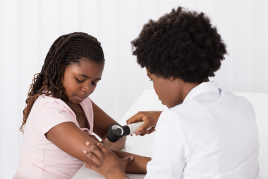
When oral medications are prescribed for acne, it is important that
the patient consult a specialist trained in acne therapy, such as a
dermatologist.
Physical Procedures
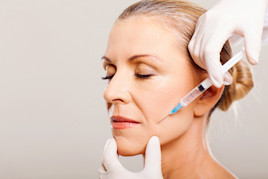
To treat the occasional persistent nodule or cyst, a dermatologist
may inject a corticosteroid into the lesion. This treatment quickly
reduces pain and swelling as well as lessens the potential for
scarring.
While chemical peels and other physical treatments available in
spa-like settings claim to effectively treat acne, their role in
treating adult acne has not been determined.
Proper Skin Care Essential
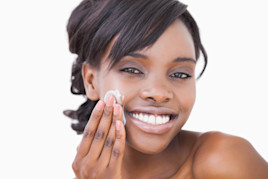
When it comes to skin care for their patients with acne,
dermatologists generally recommend gently washing the face with a
mild facial cleanser. Avoid vigorous scrubbing, as it can irritate
the skin and make acne worse. Daily sun protection is essential
because some acne medications increase the skin’s sensitivity to
sunlight. It is equally important to use only skin and hair care
products labeled “non-comedogenic” or “non-acnegenic.” Above all, do
not pick, squeeze, or pop the lesions. This tends to make acne worse
and cause scarring.
Benefits of a Dermatologist’s Help
If over-the-counter acne treatments and good skin care fail to clear
the acne, do not get discouraged. Seeing a dermatologist can give
you peace of mind. The lesions may not be acne. Other skin
conditions resemble acne. A dermatologist can tell. If acne is the
problem, different medication may be required.
Getting the acne under control has benefits. It reduces the risk of
scarring. The longer the acne persists, the more likely it is to
cause scarring. Gaining control over acne also can improve one’s
quality of life. Research shows that older adults report more
negative effects on their quality of life from acne than do younger
people.
References:
1 American Academy of Dermatology. New Oral Acne Medications Poised
to Benefit Patients. News release issued August 4, 2007. Last
accessed August 30, 2007 at
www.aad.org/media/background/news/Releases/
New_Oral_Acne_Medications_Poised_to_Benefit_Patien/.
2 American Academy of Dermatology. Millions of Women Facing Adult
Acne. News release issued July 30, 2004. Last accessed August 30,
2007 at
www.aad.org/media/background/news/Releases/Millions_of_Women_Facing_Adult_Acne/.
3 Berger R, Barba
A, Fleischer A et al. A Double-Blinded, Randomized,
Vehicle-Controlled, Multicenter, Parellel-Group Study to Assess the
Safety and Efficacy of Tretinoin Gel Microsphere 0.04% in the
Treatment of Acne Vulgaris in Adults. Cutis 2007;80: 152-57.
4 Draelos, ZD. Acne Treatments in Adult Women. Presented during a
forum (FRM 511) at the Summer Academy Meeting of the American
Academy of Dermatology, August 2007; New York City
5 Shaw JC. Low-dose adjunctive spironolactone in the treatment of
acne in women: a retrospective analysis of 85 consecutively treated
patients. Journal of the American Academy of Dermatology
2000; 43: 498-502.
6 Williams C, Layton AM. Persistent acne in women: implications for
the patient and for therapy. American Journal of Clinical
Dermatology 2006; 7: 281-90.

All
content solely developed by the American Academy of Dermatology |
 |
 |
|
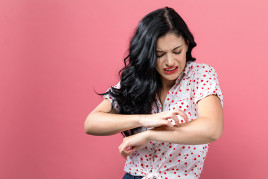
Acne often takes longer to
resolve in adults than teenagers. |
|
|
|