





| |
AcneNet Article
Psst . .
. Topical Acne Medication Can Clear Acne
The secret is knowing how to use it
Did you know the way that you apply topical acne medication and even
your skin care routine can affect how well the acne treatment works?
To help you get the best results from topical acne medication, here
are some inside tips from dermatologists.
-
Use as directed. The next time you are tempted to use more
medication in order to get faster results or apply your acne
medications once a day instead of using some in the morning and
others at night as directed, remember this:
-
The directions you see printed on a label or that you get from your
dermatologist are based on numerous research studies that have been
conducted to determine how to get the best results.
-
Using medication as directed increases effectiveness and decreases
the risk of possible side effects.
-
Place all acne medication so that you see it everyday. Do you
sometimes forget to use your acne medication? Placing the medication
in plain view, next to your toothbrush or with your makeup, can help
you remember to use it.
-
Wash and wait. Be sure to wait 10 to 15 minutes after washing
your face or showering before you apply topical acne medication.
This helps reduce the chance that a medication will irritate your
skin.
-
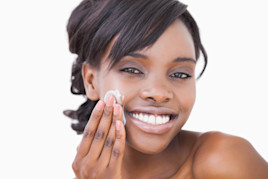
Apply these medications — benzoyl peroxide, topical antibiotics,
and topical retinoids — to the entire acne-prone area, not just the
blemishes. Clearing generally does not occur when these medications
are only applied to the blemishes.
-
Dab on several smaller amounts instead of one larger amount.
Applying several smaller amounts delivers a stronger concentration
of medication to several areas. This increases effectiveness.
-
Do you see redness, drying, or peeling after applying a topical
acne medication? These indicate that your skin is irritated. People
using topical retinoids (adapalene, tretinoin, and tazarotene) to
clear acne may experience these side effects. Following this action
plan can help:
-
Check your cleanser. You should use a mild cleanser on your face
and other acne-prone areas. A mild cleanser feels non-abrasive and
does not contain alcohol.
If your cleanser does not fit this description, switch cleansers.
-
Stop using over-the-counter medications that contain alpha-hydroxy
acids or salicylic acids. While your skin is irritated, stop using
over-the-counter products that contain these ingredients, which can
irritate the skin causing redness, dryness, and peeling.
-
Avoid rubbing alcohol and all astringents, exfoliators, masks, and
toners. These can irritate acne-prone skin.
-
Read the directions to make sure you are using the medication
properly. Using more than directed can cause irritation as can using
the medication more frequently than recommended. If you have
questions about a prescription medication, be sure to contact your
dermatologist.
If you are using the medication as directed, try these tips:
-
Wait a bit longer. Try waiting 20 to 30 minutes after washing
before applying the medication.
-
Use a smaller amount than directed, or use the medication every
other day until the irritation clears.
-
Apply a moisturizer. Using a noncomedogenic (won’t clog pores)
moisturizer immediately after applying the medication can reduce the
redness, drying, and peeling.
-
Do you experience itching or stinging after applying a topical
acne medication? These indicate that your skin is dry or irritated.
Following this action plan can help:
-
Check your cleanser. You should use a mild cleanser on your face
and other acne-prone areas. A mild cleanser feels non-abrasive and
does not contain alcohol.
If your cleanser does not fit this description, switch cleansers.
-
Wait a bit longer. Try waiting 20 to 30 minutes instead of 10 to
15 minutes after washing the skin to apply the medication.
-
Moisturize first. Apply a noncomedogenic (won’t clog pores)
moisturizer first and then the medication. This can reduce dryness.
-
Give acne medication enough time to do its job. Acne does not
clear overnight. Do not stop using a medication if you do not see
results in a few weeks. After 6 – 8 weeks, you can expect to see
about a 40% improvement. It takes 4 to 6 months to see significant
improvement.
-
Follow the skin care guidelines for acne-prone skin. Your skin
care routine also affects the results. For dermatologist-recommended
tips, see
Skin Care for People with Acne.

All
content solely developed by the American Academy of Dermatology |
 |
|