





| |
AcneNet Article
The Naked Truth About Natural Acne Treatments
Have you ever been tempted to try a
natural treatment for your acne? An all-natural supplement or diet
certainly seems like a safe option. The truth is that all-natural
supplements may not be as safe as you think. And, despite the
claims, studies have not proven that any acne diet works.
All-natural supplements can have serious side effects
Supplements sold in health food stores and online should be safe,
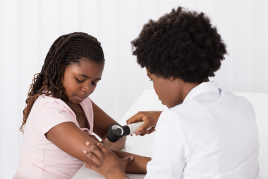
right? Two women who started taking a supplement to improve their
health thought so. Both wound up seeing a dermatologist for problems
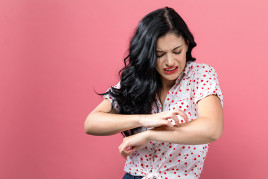
with their skin, hair, and nails. Their problems included a rash,
scaly skin, breakouts on the scalp, lots of hair loss, and
discolored nails. One woman felt dizzy and exhausted.
An all-natural supplement was causing their problems. Testing
revealed that this supplement contained more than 200 times the
amount of selenium stated on the label. Our bodies need selenium for
healthy skin, but too much can be toxic. Too much causes selenium
poisoning.
|
Signs and Symptoms of Selenium Poisoning
If you are looking for a
home remedy for acne, you may see selenium for sale.
Taking too much selenium can cause serious health
problems. Selenium poisoning can cause:
|
Skin, Hair, and Nail Problems |
Stomach Problems |
-
Rash
-
Scaly skin
-
Itchy skin
-
Acne-like
breakouts on the scalp
-
Hair loss
that gets worse
-
Changes to
fingernails and toenails
-
Fingernails
and toenails may fall off
|
- Feeling sick to your stomach
(nausea)
- Vomiting
- Diarrhea
|
|
Other
Problems |
- Hard to breath
- Dizziness
- Feeling very tired
|
If you think that you have selenium poisoning, stop
taking all vitamins, minerals, herbs, and other
supplements. See your doctor right away.
|
Hundreds of people reported health
problems after taking the supplement that contained too much
selenium. One man still has problems breathing. Eventually, stores
stopped selling this supplement.
Why are harmful supplements sold?
In the United States, supplements do not need to be tested and found
safe before they are placed on store shelves or sold online.
Companies that make supplements do not need to prove that a
supplement works. The government does not require safety testing of
the ingredients that go into supplements. Even when the ingredients
come from another country, safety testing is not required.
Because of these practices, harmful supplements do appear from time
to time. It can be very hard for the U.S. government to order
retailers to stop selling a supplement. Instead, the government
issues warnings. This means you need to listen to the news for
recall information.
The government also may ask a company to recall products considered
unsafe. Recalls are voluntary, but companies usually comply. Recalls
only happen after problems occur.
This makes it very difficult to know which supplements are safe.
Diets should be safe, so why can’t studies prove which foods
affect acne?
It certainly seems possible that what people eat and drink can
affect their acne. Research shows that taking the medicine, lithium,
can make a person’s acne worse. When it comes to food and drink, the
truth is that we just do not know for sure.
Here’s why we do not know. When researchers conduct studies, they
start by testing an idea. For example, when dermatologists wanted to
know whether acne patients who followed a certain diet had less acne
than patients who eat whatever they want, the dermatologists
designed a study to test this idea. In the first study,
dermatologists found that the patients who followed the diet had
less acne.
The dermatologists also found that the patients who followed the
diet lost weight and had healthier insulin levels. This means that
the diet could have caused the improvement. Less acne also could
have been caused by the weight loss or healthier insulin level. To
find out what happened, the study was repeated.
When the study was repeated, the patients given the special diet did
not have less acne. This means that we really do not know for sure
whether the diet leads to less acne. When it comes to research about
diet and acne, there are many examples like this one. That’s why we
do not know for sure.
What do studies prove can treat acne?
While researchers are still studying the connection between acne and
diet, there are studies that show what can safely and effectively
treat acne. This is what the research shows:
-
Skin care makes a difference.
Skin care can be just as
important as the treatment(s) you use to clear your acne. Proper
skin care can reduce possible side effects from prescription
medications. It can make a product that you can buy without a
prescription more effective. Proper skin care can even help you
prevent new breakouts once your skin clears.
-
Healthy foods deliver more
nutrition than supplements. Fresh
fruits and vegetables, whole grains, and other foods found in a
healthy diet contain many beneficial nutrients. For example,
plants contain phytochemcials. These may sound harmful, but they
actually interact in so many ways to keep us healthy.
Your body cannot possibly get all
it needs from a pill or powder.
-
Supplements can interact with
prescription medicines and cause unexpected problems.
Be sure to tell your
dermatologist about all vitamins, minerals, herbs, and other
supplements that you take. Your dermatologist needs to know to
protect you. And before starting a supplement, be sure to tell
your dermatologist.
-
Medicine prescribed by your
dermatologist has been tested and found to work on acne.
Before a medicine can be used in
the United States, it must be tested in clinical trials and
found to be safe and effective.
Many effective acne treatments are
available. If a treatment worries you, be sure to tell your
dermatologist. A dermatologist does not want to prescribe a
treatment that you will not use. Treatment cannot work if you do not
use it.
More Information
Skin Care for Acne-prone Skin
Reference:
Adebamowo CA, Spiegelman D, Berkey CS et al. “Milk
consumption and acne in teenaged boys.” Journal of the American
Academy of Dermatology; May 2008; 58: 787-93.
Bowe WP, Joshi SS, Shalita AR. “Diet and acne.” Journal of the
American Academy of Dermatology; July 2010; 63: 124-41.
Consumer Reports, “Dangerous supplements.” Consumer Reports;
September 2010; 16-20.
Lopez RE, Knable AL, Jr., Burruss JB. Ingestion of a dietary
supplement resulting in selenium toxicity. Journal of the
American Academy of Dermatology; July 2010; 63: 168-9.
Michaelsson G. “Decreased concentration of selenium in whole blood
and plasma in acne vulgaris.” Acta Dermato-Venereologica; 1990; 70:
92.
Smith RN, Mann NJ, Braue A et al. “The effect of a
high-protein, low glycemic-load diet versus a conventional, high
glycemic-load diet on biochemical parameters associated with acne
vulgaris: a randomized, investigator-masked, controlled trial.”
Journal of the American Academy of Dermatology; August 2007; 57:
247-56.
Webster GF. “Commentary: Diet and acne.” Journal of the American
Academy of Dermatology; March 2008; 58: 794-5.

All
content solely developed by the American Academy of Dermatology |
 |
|