









| |
Aging Hair/Skin Problems
Age Spots
People use the term “age spot” to refer
to various spots and bumps that appear on the skin with age. Some of
these spots and bumps are harmless. Others can be a sign of skin
cancer. This is why it is so important to have a dermatologist
examine your skin.
What Causes Age Spots?
Most age spots develop on skin that has been badly damaged by the
sun’s ultraviolet (UV) rays. Age spots also appear on the skin of
people who use tanning beds and sun lamps. These devices also emit
UV rays. The cause of one type of age spot, seborrheic keratosis (SK),
is not known. Some studies suggest that sun exposure plays a role.
At-home Remedies for Age Spots
Not all age spots are harmless. Sometimes what appears to be an age
spot is actually melanoma or another type of skin cancer. With
early detection and proper treatment, skin cancer has a high cure
rate. When melanoma spreads, it can be deadly.
For these reasons, dermatologists recommend that everyone see a
dermatologist for a skin examination. During this examination, you
should ask your dermatologist:
|
Ask Your Dermatologist:
-
Is it okay for me to
use a product that I can buy without a prescription
to treat age spots? If your skin shows plenty of
sun damage, using one of these products may not be
wise. It can delay diagnosis of a skin cancer.
-
How often should I
return for a skin examination? This will depend
on several factors, including the amount of sun
damage to your skin.
|
If your dermatologist approves of you
using a product you can buy without a prescription, it is important
to do the following:
-
Apply sunscreen every day to all
skin that will not be covered by clothing. You will not see
results from a treatment for age spots if you do not protect
your skin from UV rays. The sun, tanning beds, and sunlamps all
produce UV rays.
Sunscreen also will help prevent further damage to your skin.
The American Academy of Dermatology recommends the following:
-
Use a sunscreen that offers a
Sun Protection Factor (SPF) of 30 or greater and
broad-spectrum (UVA/UVB) protection.
-
Apply the sunscreen 20 minutes
before going outside. When you are in the sun, reapply the
sunscreen every 2 hours.
-
Look at the list of ingredients
on a fade cream or similar product. Some fade creams and
bleaching treatments are available without a prescription. These
products generally contain hydroquinone (hy-dro-QUIN-own).
Prescription-strength products that contain hydroquinone tend to
be more effective than those you can buy without a prescription.
Other products that may help fade age spots are called skin
brighteners, lighteners, or whiteners. These products usually
contain soy, licorice, or kojic acid. Again,
prescription-strength products tend to be more effective than
products that you can buy without a prescription.
-
Beware: Products from outside
the United States may contain an inaccurate list of ingredients.
Some imported products contain mercury; others products include
high-potency steroids. While illegal, these products do find
their way into the United States. Using a product that contains
a high-potency steroid can cause paper-thin skin, acne, and
stretch marks.
Some imported products contain much higher levels of
hydroquinone than currently allowed in the United States. These
high levels can irritate the skin and cause visible,
light-colored halos to appear on the treated skin.
Age-Spot Treatments Dermatologists
Offer
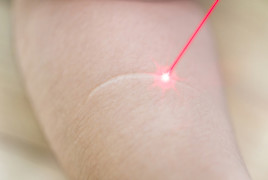
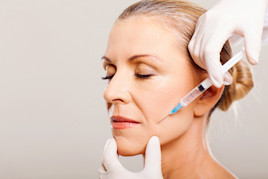
Many patients say they do not see the results they want from
products available without a prescription. Dermatologists offer the
following treatments for those age spots that people often call
“liver spots” or “sun spots”:
More
Information
10 Questions to Ask Before
a Cosmetic Procedure
Age-Fighting Topicals
Cosmetic Procedures
References:
Bates, B. “Derms React to Possible FDA Ban of Hydroquinone.” Skin
& Allergy News. January 2007, p. 1+
Jesitus, J. “FDA Impact Felt by Derms.” Dermatology Times.
December 2006. p. 1+

All content solely
developed by the American Academy of Dermatology
|
 |
 |
|

For Your Safety
A dermatologist should promptly examine any spot that
starts to bleed or changes in size, shape, or color.
These are warning signs of skin cancer. |
|
|
|