



|
AgingSkinNet Article
Non-Facial Aging Skin: Treatments
Our faces aren’t the only
parts of our body that succumb to lifelong sun exposure and collagen
breakdown. The good news is that just as there are treatments to
rejuvenate aging skin on the face, there are treatments that can
make the neck, décolleté, hands and legs more youthful.
When we look for the reasons for our
aging skin, we need to look no further than the sun. The sun causes
90 percent to 95 percent of the wrinkles; lines; brown, red and
white discolorations; and more on our bodies. That’s why the
sun-exposed areas, including the backs of the hands, are most prone
to the imperfections.
Rejuvenating Neck and Chest Skin
With age, many experience
more and more pronounced skin blotchiness and spider veins, called
telangiectasias, on the sides of the neck and chest. The condition,
called poikiloderma, is a result of sun damage. Areas of atrophy,
which are white areas, are related to loss of elasticity. The neck
and the chest are particularly prone to these white indentations
because of the thinning skin in the region.
Chemical peels and bleaching agents
applied directly to the skin help with the pigmentation problems,
including white and brown spots. Laser and light treatments,
including pulsed light lasers, reduce redness.
A problem that often occurs is the
mismatched coloration on the neck after a person has laser
rejuvenation on the face. Laser procedures and chemical peels can
lighten the skin. As a result, dermatologists can also lighten those
areas, such as the neck, which can contrast the face, with a
trichloracetic acid (TCA) peel. This helps to blend in the areas so
that the face doesn’t look strikingly lighter than the neck and
chest.
Nonablative lasers are tools
dermatologists use to treat sun damage on the neck and chest area.
While lasers work by heating and removing the top skin layers,
nonablative lasers work beneath the skin’s surface by targeting
cells that absorb the light’s energy. The underlying sources of the
skin discoloration break apart from the laser’s light and become
absorbed in the body.
After a series of nonablative laser
treatments, dermatologists can reduce the signs of aging and sun
damage, including fine wrinkles, freckles and irregular
pigmentation—especially on the face, neck and chest (though it can
also be used on the hands). Patients who have these procedures can
return immediately to activities because nonablative laser therapy
causes no downtime.
Photo rejuvenation is yet another
approach that uses intense pulsed light technology to correct
imperfections on the hands, neck, chest and face. The light
penetrates the outer layer of skin without causing damage and goes
directly to the dilated vessels or pigment. Patients have no
downtime from the procedure but typically they require a series of
treatments for optimal results.
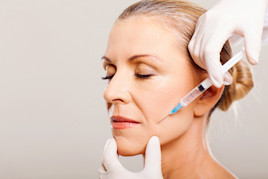
Botulinum toxin can be used on the
chest for diminishing wrinkles. Ask your dermatologist about its use
in décolleté smoothing to relax the muscles underneath.
Younger Looking Hands
Many focus on rejuvenating
the skin on their faces but forget about their aging hands. Among
the most common problems associated with aging hands are lentigines,
or brown spots, which respond to a number of treatments.
For those who don’t want to undergo any
procedures, there is the option of dermatologist-prescribed
bleaching creams, which patients rub on their hands on a regular
basis for the long-term. These work subtly to reduce the
discoloration of dark pigmented spots.
Approaches that lead to more dramatic,
faster results include the use of chemical peels, from the
superficial glycolic acid to the medium TCA peels, which work to
remove dead skin cells and stimulate the production of new skin
cells. Dermatologists use these peels on different parts of the
sun-exposed body, including the hands, to diminish age spots and
lighten the skin. Cryosurgery with liquid nitrogen can peel local
areas.
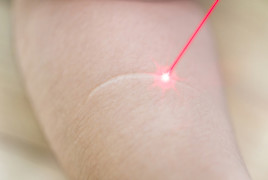
Some dermatologists also use lasers,
such as the Q-switched Nd: YAG laser, to change the hands’ skin
color and remove spots. Unlike the face, hands are much easier to
treat. Typically, laser treatments correcting discolorations on the
hands might take about 10 minutes in a dermatologist’s office.
The skin on the hands also tends to be
thin. Dermatologists have the option of using fat transplantation
from other areas of the body to give the hands a more youthful
plumpness. This can be done in conjunction with other procedures to
lighten the hyperpigmented (or dark) areas on the hands.
Diminishing Leg Veins: Options in the
Dermatology Office
Varicose and spider veins on
the legs can worsen with age. Here, too, dermatologists have an
arsenal of treatments to bring youthfulness back to the skin on the
legs.
Varicose veins are abnormally swollen
or enlarged blood vessels caused by a weakening of the vein’s walls.
Dermatologists can treat the condition with a procedure called radio
frequency closure. This involves the dermatologist inserting a small
tube, or catheter, into the varicose vein through a small puncture.
The catheter delivers radio frequency energy to the vein wall,
causing it to shrink and seal shut. Patients generally do not feel
pain during the procedure and often can return immediately
afterwards to activities.
Though not as common, the endovascular
laser procedure is another technique used to treat varicose veins.
The technique involves inserting a diode laser wire or fiber
directly into the vein. The laser fiber penetrates the skin to
deliver laser energy into the vein, which heats and destroys the
vein.
Dermatologists today treat leg spider
veins, which are red or bluish appearing dilated small blood vessels
located close to the skin’s surface, with lasers, which were
traditionally reserved for the face. Newer versions of laser
technology, including the Nd: YAG 1064nm, use wavelengths to
penetrate the skin of the legs without heating the pigment. This
reduces the risk of burning or injury to the skin. Typically, two to
five treatments, which last about 15 minutes each, are required to
remove spider veins.
The mainstay of leg vein treatments
continues to be injection with sclerosing solutions or sclerotherapy,
a method in which the solution is injected with a very fine needle
directly into the blood vessel. All of the above procedures work in
conjunction with or in addition to its benefit.

All content solely
developed by the American Academy of Dermatology
|