







| |
AgingSkinNet Article
10 Questions to Ask Before a Cosmetic Procedure
While the convenience of having an
anti-aging treatment performed at a local spa, shopping mall, or
walk-in clinic can be alluring, opting for this convenience could
jeopardize health and safety. Treatments that turn back the hands of
time such as chemical peels, laser skin rejuvenation, and
microdermabrasion are cosmetic surgical procedures that require
medical training for best results.
Asking the following questions before having a
cosmetic procedure can help patients find a qualified practitioner
and avoid complications:
-
Will a board-certified
dermatologist perform the procedure?
The success of any cosmetic
procedure is highly dependent on the knowledge and skill of the
person performing it. For this reason, the American Academy of
Dermatology (Academy) urges everyone considering a cosmetic
procedure to select a doctor who is board certified in
dermatology or a similar medical specialty.
The Academy recommends that all treatments be performed by the
physician or under the direct supervision of the physician.
“Direct supervision” means the doctor is on site while the
procedure is being performed and is immediately available during
the procedure.
Complications increase when cosmetic procedures are not
performed by a board-certified physician or under the doctor’s
direct supervision. In a 2007 survey conducted by the American
Society for Dermatologic Surgery (ASDS), 56% of the dermatologic
surgeons replied that they have been treating more patients for
complications caused by a non-physician performing a cosmetic
procedure such as a chemical peel or laser therapy. Burns,
scarring, and skin discoloration are some of the most common
complications.
More than 90% of the dermatologic surgeons also said that they
had seen at least one patient in the last year who had skin
cancer that was either overlooked or misdiagnosed by an
untrained practitioner. Without early diagnosis and treatment
for skin cancer, the patient may have to undergo extensive
surgery to remove the cancer. This can cause permanent
disfiguration. Skin cancer also can spread. In the United States
alone, one person dies from melanoma, the deadliest form of skin
cancer, almost every hour.
-
How many times has the doctor
performed the procedure?
Don’t be afraid to ask this
question. The procedure should be one
that the doctor performs regularly. When physicians have
specialized training in performing a procedure and have
successfully
performed the procedure on numerous patients, they usually want
others to know.
-
What results can I expect?
While results depend largely on
the skill and experience of the person performing the procedure,
the condition of the patient’s skin as well as the patient’s age
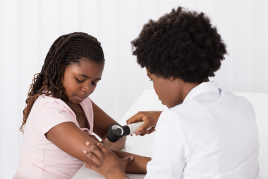
and health affect the cosmetic outcome. A dermatologist
typically tells a patient what to expect after visually
examining the skin and gathering a medical history. A
dermatologist also can tell the patient if the procedure will
deliver the desired results and if it is appropriate for the
patient. Often a combination of techniques provides the best
results.
|
Tip: To help
communicate the results you seek, find pictures to show
what you want to look like. For example, if you want
fuller, more youthful lips, find a photograph of the
lips you desire. Photographs greatly help communicate
expectations and break down communication barriers. |
-
May I see “before” and “after”
photographs of patients or speak with patients whom the doctor
has treated with this procedure(s)?
Doctors should be willing to
share their results through photographs or referrals. If a
physician is hesitant to do so, find one who will.
-
What is the recovery time?
While cosmetic procedures have
become less invasive and require less downtime, patients should
know what to expect after the procedure. For example, after
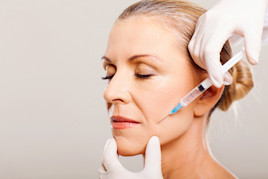
botulinum rejuvenation (an injectable that temporary diminishes
fine lines and wrinkles) patients can have temporary swelling,
redness or bruising.
-
What are the risks and side
effects of the procedure?
While the risks involved in most cosmetic procedures are
minimal, there are risks. Potential complications should be
discussed before the cosmetic procedure is
scheduled.
-
How long will the results last?
Most cosmetic results are not
permanent. While a patient’s lifestyle and overall health can
shorten the length of time that a patient sees the results,
there are general guidelines. For example, botulinum
rejuvenation tends to last about 3 to 4 months.
-
Where will the procedure be
performed? Most cosmetic
procedures can be safely and effectively performed in a
physician’s office, surgical suite, or outpatient surgical
center. This gives the patient a safe, cost-effective
alternative to the hospital and a level of care that spas,
shopping malls, and walk-in clinics cannot offer.
-
What follow-up care is included?
Follow-up care is an important
part of cosmetic surgical procedures. Be wary of undergoing any
cosmetic surgery that does not include follow-up care. Cosmetic
surgery performed abroad often cannot offer follow-up care due
to the amount of time that the patient will be in the country.
Infection is a complication seen in patients who travel abroad
for cosmetic surgery.
-
What is the cost of the
treatment? Insurance usually
does not cover the cost of a cosmetic procedure. Before
scheduling the procedure, find out the costs and how payment
will be required.
|
Tip: Cost should
not tempt you to perform a cosmetic procedure at home.
While products ranging from chemical peels to
microdermabrasion kits can be purchased online, there is
little to no regulation of the sale of these products.
Too often, dermatologists see patients who have scarring
or discoloration after trying a cosmetic procedure at
home. Sometimes the results are permanent. |
Before having a cosmetic procedure, the
Academy recommends consulting with a board-certified dermatologist
or other physician who has received similar training. With their
in-depth medical training and experience performing these
procedures, dermatologists safely perform thousands of cosmetic
procedures each year with excellent results.
References:
American Academy of Dermatology, “Consumer
Alert: Questions to Ask for Safe and Successful Cosmetic Surgery.”
News Release issued July 25, 2007. Lasted accessed February 25,
2008.
American Academy of Dermatology, “Position
Statement on the Use of Non-Physician Office Personnel.”Last
amended by the Board of Directors on July 23, 2005. Last accessed
February 28, 2008.
American Society for Dermatologic Surgery,
Patient Safety Campaign: Highlights. Last accessed February 25,
2008.

All content solely
developed by the American Academy of Dermatology
|
 |
 |
|
Any anti-aging treatment that
uses the following is a cosmetic surgical procedure:
-
Botulinum rejuvenation
-
Chemical peel
-
Laser
-
Light treatment
-
Microdermabrasion
-
Soft-tissue filler
|
|

 |
|
|