







| |
EczemaNet Article
Moisturizing and Cleansing Key to Treating Atopic Dermatitis
When it comes to treating atopic dermatitis, dermatologists consider
moisturizing and gentle cleansing to be indispensable. Yet, a recent
survey revealed that 23% of adults living with atopic dermatitis say
they do not do not apply moisturizer and 29% do not use a cleanser.
The researchers also found that most of the people who participated
in the survey wanted more information about moisturizers and
cleansers.
Why is Moisturizing So Important?
Our skin is our barrier. It protects us from unseen invaders such as
bacteria, viruses, and other potentially harmful organisms and
toxins. Our skin also prevents us from losing large amounts of
water. The outermost layer of skin, the stratum corneum, serves as
our first line of defense. Some dermatologists call this our “bricks
and mortar.”
When atopic dermatitis develops, the stratum corneum breaks down.
With gaps in our bricks and mortar, the skin is more easily
irritated. These gaps also make it easier for bacteria and viruses
to enter the body. Easier access and the weakened immune system of
atopic dermatitis make people more susceptible to infection. The
skin also loses moisture more readily, causing dry skin.
Studies have shown that when patients with atopic dermatitis
properly use a recommended moisturizer, it can help:
-
Alleviate dry skin. Moisturizer forms a protective coating
that reduces the amount of water lost through the skin. This, in
turn, decreases dryness, itch, and cracking skin.
Depending on the patient’s signs and symptoms, it may be necessary
to apply moisturizer 4 or more times per day. Moisturizer should
always be applied after a shower or bath while the skin is still
damp. This locks in moisture.
-
Boost the skin’s protective abilities. Moisturizer forms a
protective membrane on the skin. One type of product called a
barrier-repair emollient may provide the skin with essential
components that can actually repair the damaged stratum corneum.
Two small studies showed that a barrier-repair emollient produced
dramatic improvement. In one of these studies, 24 children with
stubborn to recalcitrant (not responding to treatment) atopic
dermatitis were treated with a barrier-repair emollient containing
ceramide (a molecule that helps regulate our skin cells and an
effective emollient). Fifteen of the children were previously
treated with other emollients.
The emollient containing ceramide was applied twice a day for 12
weeks. All 24 children showed improvement within 3 weeks. By the end
of 12 weeks, there was such significant improvement in all children
that the researchers asked for the emollient be applied once a day.
With regular once-a-day use, the skin continued to improve.
Larger studies are needed to determine if a barrier-repair emollient
actually repairs the skin. Research, to date, has not shown whether
or not barrier-repair emollients offer any benefit not provided by
other emollients.
-
Increase the effectiveness of topical corticosteroids, and
possibly reduce the need for long-term corticosteroid treatment.
Researchers have found that using both a topical corticosteroid and
a moisturizer decreases the signs and symptoms of atopic dermatitis
better than use of a topical corticosteroid alone. Studies also have
found that proper use of a moisturizer along with a topical
corticosteroid can reduce the amount of corticosteroid needed. This
suggests that using an appropriate moisturizer may reduce the need
for long-term corticosteroids.
-
Reduce skin irritation. One study found that pre-treating
skin affected by atopic dermatits with moisturizer before exposing
it to dust mite or grass pollen significantly reduced patients’
reactions to these substances. More than half of the patients said
they would continue using the moisturizer after the study ended. The
researchers concluded that moisturizer may help prevent exacerbation
in patients with atopic dermatitis; however, more research is
needed.
-
Improve the skin’s appearance. A large-scale study found that
applying certain lipid-rich moisturizers significantly improved the
condition of skin affected by atopic dermatis. During this study,
patients either applied a lipid-rich moisturizer alone or the
lipid-rich moisturizer and a topical corticosteroid. In many cases,
the moisturizer alone was as effective as the moisturizer plus
corticosteroid in relieving dryness and scaling in patients.
However, when it came to reducing the redness and itch, the
corticosteroid plus moisturizer was more effective. This finding
suggests that once the atopic dermatitis is under control, a
moisturizer alone may be all that is needed.
Gentle Cleansing Essential
Cleansing the skin helps keep it healthy. Washing removes oils,
dirt, bacteria, dead skin cells, and a number of other substances.
The key to cleansing skin affected by atopic dermatitis is to be
gentle because the outer layer of skin, the stratum corneum, is
damaged and fragile.
Rubbing, scrubbing, peeling, microdermabrasion, and exfoliating can
cause more damage as can harsh soaps. Soap can dry the skin and
worsen itching. Mesh sponges, abrasive scrubs, and woven face cloths
should not be used as they also can further damage the skin.
Anything that increases damage to the skin can cause a flare-up and
block the effects of treatment.
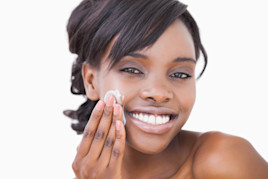
When washing, be sure to use a mild cleanser and to gently apply it
with your fingertips. Cleanser should be rinsed off with lukewarm
water. Dermatologists recommend that cleanser never be applied to
skin that has flared. Even the mildest cleanser can be quite
irritating when skin has flared.
Ask a Dermatologist for Product Recommendations
With the number of moisturizers, emollients, and cleansers on the
market, trying to choose suitable products can boggle the mind.
Typing the word “moisturizer” in a popular Internet search engine
yields more than 2 million results. If that is not challenge enough,
certain ingredients in these products can cause folliculitis (a type
of skin inflammation that may resemble acne) or prickly heat in
people living with atopic dermatitis. And, did you know that
products containing glycerin and rose water — ingredients used to
effectively moisturize skin — can increase dryness in skin affected
by atopic dermatitis?
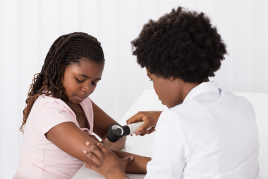
To help sort through the options, you may want to schedule an
appointment with a dermatologist. After considering a number of
factors, such as the severity of your atopic dermatitis and overall
health, the dermatologist can recommend suitable products. This can
save you time and money. During this appointment, the dermatologist
also can show you how to apply cleanser and moisturizer to get
optimal results.
References:
Berson D. “Recommendation of Moisturizers and Cleansers: A Study of
Unmet Needs Among Dermatology Patients.” Cutis. 2005
December;76(6S):3-6.
Chamlin SL et al. “Ceramide-dominant barrier repair lipids alleviate
childhood atopic dermatitis: Changes in barrier function provide a
sensitive indicator of disease activity.” Journal of the American
Academy of Dermatology. 2002 August; 47(2):198-208.
Draelos, ZD. “Concepts in Skin Care Maintenance.” Cutis. 2005
December;76(6S):19-25.
Eichenfield LF et at. “Consensus conference on pediatric atopic
dermatitis.” Journal of the American Academy of Dermatology.
2003 December; 49(6)1088-95.
Ghali FE. “Improved Clinical Outcomes with Moisturization in
Dermatologic Disease.” Cutis. 2005 December;76(6S):13-18.
Lebwohl M et al. “Impaired Skin Barrier Function in Dermatologic
Disease and Repair with Moisturization.” Cutis. 2005
December;76(6S):7-12

All content solely
developed by the American Academy of Dermatology |
 |
|