







|
EczemaNet Spotlight Article
The
Truth About "Other" Therapies for Atopic Dermatitis
Eczema therapies
that “guarantee” clear skin or promise an “amazing breakthrough” can
be appealing. The longer you have been treating atopic dermatitis,
the more alluring these ads may seem.
The truth is nothing
cures atopic dermatitis. What researchers have found is that some
therapies, when added to a treatment plan prescribed by a
dermatologist, can improve results. Others have no effect. A few can
cause serious, even life-threatening, side effects. Here is what the
research shows:
Behavior Modification + Topical
Therapy: A Win-Win Approach
Adding a therapy called “behavior modification” to a treatment plan
prescribed by a dermatologist may lead to clearer skin. Behavior
modification is a technique used to help people change what they do
so that they can get better results.
One behavior
modification technique that has proven helpful for patients with
atopic dermatitis is the combined approach. Used mostly in the
United Kingdom, this approach teaches patients techniques that can
help them avoid scratching. Patients also receive one-on-one
training, usually from a nurse, on how to use moisturizer and their
medications.
When tested in
research studies, the combined approach produced dramatic results.
Without the habitual scratching — people with atopic dermatitis may
scratch their skin 500 to 1,000 times per day — and with proper use
of topical therapy, even patients with severe long-term atopic
dermatitis saw significantly clearer skin.
Bottom line:
Avoiding scratching and using medication as directed allows the skin
to heal. The combined approach is but one effective technique. To
find tips that dermatologists tell their patients to help them
reduce scratching, visit
Preventing Flare-Ups.
Emotional Support
Makes a Difference
A
skin disease can diminish a person’s quality of life.
Patients with atopic dermatitis often have low self-esteem. Many say
their skin makes them feel isolated and embarrassed. A support
group, camp, or conferences created for people living with a skin
condition can help.
Support group.
In June 2003, a hospital in Brazil began a support group for
children younger than 12 years of age who had atopic dermatitis. The
group met every 15 days. Initially, the children were insecure and
kept to themselves. Once they recognized their similarities, they
began to interact with each other. After 6 to 8 meetings, the
doctors noticed several improvements. The children developed
stronger bonds with the medical staff. They learned more about
atopic dermatitis and how to better manage their symptoms. As their
self-confidence grew, their symptoms lessened.
To provide families
with this kind of support, the U.S. National Eczema Association (NEA)
offers support groups and telephone support. For contact
information, go to the NEA’s
Support Group Leader and Telephone Support Contacts.
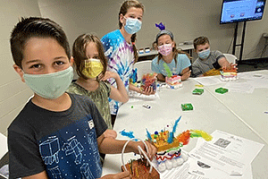
Camp. Operated by the American Academy of Dermatology, Camp
Discovery offers children with skin conditions an opportunity to
meet and develop bonds with others in their age group. Under the
expert care of dermatologists and nurses, campers can go fishing,
boating, swimming, and water skiing — even if they never previously
participated in these activities. They can enjoy arts and crafts and
just have fun with kids like themselves. By the end of the week, it
is common to hear kids say, “The best thing about camp is that it
gives you self-confidence for the whole year.” To learn more, visit
the Camp Discovery Web site.
Conference. The NEA offers an annual conference for people of
all ages who have atopic dermatitis/eczema or care for someone who
does. During the conference, participants have the opportunity to
share experiences with others who face similar challenges and to
learn more about eczema. In this relaxed setting, kids can enjoy a
camping experience with other children who have eczema. Adults can
join support sessions and attend medical presentations. Everyone has
an opportunity to meet dermatologists and ask questions. For more
information about this annual conference, send an e-mail to
info@nationaleczema.org.
Bottom line:
The emotional support gained by participating in a support group,
camp, or conference created for people living with a skin disease
can significantly improve the quality of life for someone who has
atopic dermatitis.
Stress Busters Can Spell
Relief
For many living with atopic dermatitis, stress triggers a flare-up.
Studies confirm that when stress begins, the skin often starts to
itch.
To help people with
atopic dermatitis reduce stress, researchers continue to study the
safety and effectiveness of several stress-reduction techniques.
Biotherapy, progressive muscle relaxation, and massage are just a
few of the stress-reduction techniques that have been studied. While
the results from these preliminary studies are encouraging, the
studies are too small to draw conclusions.
What the studies
have shown is that keeping calm and having a positive outlook may be
one of the best ways to keep eczema under control. To learn some
stress-busting tips recommended by dermatologists, visit
Stress Reduction Techniques.
Bottom line.
Finding ways to relieve stress can have a positive effect on your
skin — and your life. Before trying a new stress-reduction
technique, talk with your dermatologist. While stress-reduction
techniques seem harmless, some can have a powerful effect.
Biofeedback can change a diabetic’s need for insulin. Massage can do
more harm than good if the person giving the massage does not know
how to treat someone who has a skin condition.
Probiotics: More Research
Needed
A
few studies indicate that taking a dietary supplement containing
probiotics (live bacteria) — when used along with topical therapy —
may help reduce the severity and extent of atopic dermatitis in
children.
While these findings are promising, more research is
needed. Each study tested a different blend of probiotics. The
appropriate blend and dose for treating atopic dermatitis have not
been determined. The long-term effects are not known.
Most of
this research has been conducted in Europe and Australia.
Researchers do not know if supplements now available in the United
States can be beneficial for atopic dermatitis.
Bottom line:
Before taking a supplement containing probiotics or giving one to a
child, speak with a dermatologist. Ask if a supplement containing
probiotics might help and if it is advisable to take this
supplement. Some dietary supplements can trigger an allergic
reaction; others can interact with medication. If the dermatologist
believes probiotics may help, be sure to get a product
recommendation. Dietary supplements are not regulated as strictly as
medications.
Other
Dietary Supplements: No Proof These Help
Borage oil, evening primrose oil, vitamin
B6 (pyridoxine), vitamin E, and zinc — each has been promoted
as a safe and effective treatment for eczema. To find evidence for
these claims, researchers have been studying these supplements.
Two studies
investigated borage oil supplements. Researchers found that
while patients did not experience side effects, the patients’
overall response to borage oil was not significant. The most
noticeable effect was seen in a study in which adults with
moderately severe atopic dermatitis were given a capsule that
contained 500 milligrams of borage oil every day for 24 weeks. The
patients taking the borage oil supplement noticed a slight
improvement. Those given the placebo did not experience this slight
improvement.
Evening primrose oil
also has not proven effective in treating atopic dermatitis. In one
study, 58 children with atopic dermatitis participated in a 16-week
trial. All of the children received topical therapy. They also
received either capsules containing evening primrose oil or a
placebo. At the end of 16 weeks, all 58 children showed significant
improvement. There was no difference between the children given the
evening primrose oil and those taking the placebo.
Studies show that
adding zinc, vitamin E, or vitamin B6 supplement also
has not proven effective in treating atopic dermatitis.
Bottom line:
Research studies find that supplementing the diet with borage oil,
evening primrose oil, vitamin B6, vitamin E, or zinc does not prove
effective in relieving signs and symptoms of atopic dermatitis.
Teas: The Right Blend May
Help
Studies suggest that tea — whether green, black, or
oolong — can prevent some allergic reactions. To find out if tea
could benefit patients with atopic dermatitis, researchers in Japan
recruited patients with atopic dermatitis who had not respond to
other treatment. The patients were instructed to continue following
their treatment plan and to drink one liter of oolong tea every day.
The liter was to be divided into thirds so that one-third of it was
drunk after each of three meals. Of the 118 patients who completed
the study, 63% showed marked to moderate improvement after one
month. This effect was first noticed after one or two weeks.
It should be noted
that green, black, and oolong teas contain caffeine, which can
increase
restlessness, anxiety, and sleeplessness. Having
atopic dermatitis produces these feelings in many patients, and
caffeine may intensify these feelings.
Some
people swear by a tea that does not contain caffeine. While
chamomile is used worldwide to treat many conditions including
atopic dermatitis, there is not enough reliable research in humans
to support its use as a tea, essential oil, or in any other form.
One reason may be that too many cases of people developing an
allergic reaction after eating or coming into contact with the
chamomile plant have been reported.
A few cases of
anaphylaxis, a severe and potentially life-threatening allergic
reaction, have occurred. Anaphylaxis makes blood pressure drop
suddenly. Breathing becomes difficult. Some people loss
consciousness and some die.
Bottom
line:
Limited research suggests that drinking oolong tea may help patients
with atopic dermatitis when used along with treatment prescribed by
a dermatologist. Chamomile has been shown to cause an allergic
reaction, which in a few cases has been life threatening.
Chinese Herbal
Medicines Can Be Toxic
Blends of Chinese herbs have proven effective in controlling
atopic dermatitis. For some patients, these medicines also have
proven toxic. Two children participating in a long-term research
study not only saw clearer skin after taking a Chinese herbal
medicine, they developed abnormal liver function.
Liver toxicity has
been detected in others taking Chinese herbal medicines. One poison
unit in London reported 21 cases of liver toxicity in patients
taking Chinese herbal medicine to relieve skin conditions.
Kidney failure is
another possible side effect. Two patients who used Chinese herbal
medicine to treat their eczema developed end-stage kidney failure
and needed kidney transplants. Heart disease is another condition
linked to the use of Chinese herbal medicine.
Applying an herbal
remedy to the skin also can cause side effects. Chemical analysis
shows that several over-the-counter herbal creams sold for the
treatment of eczema and psoriasis contain potent corticosteroids.
This is the reason they work so well. Long-term use of potent
topical corticosteroids can cause thinning skin, dilated blood
vessels, stretch marks, infection, and excess body hair. Many
patients who use herbal creams to treat atopic dermatitis develop
allergic contact dermatitis — another type of eczema.
Bottom line.
While some blends of Chinese herbal medicines and topical herbal
creams may effectively treat eczema, these therapies are not
regulated. The possibility of serious side effects exists, so be
sure to speak with a dermatologist before using any herbal medicine.
Partner with a
Dermatologist
New ways to treat atopic dermatitis can be appealing. Before trying
another therapy, be sure to consult a dermatologist.
Over-the-counter products and alternative therapies should not be a
substitute for a dermatologist’s care. These should not be tried
before seeking medical care for atopic dermatitis. If side effects
occur after trying any treatment for atopic dermatitis, be sure to
tell your dermatologist.
References:
Behavior Modification
Staughton R. et al. “Psychologic approach to atopic
skin disease.” Journal of the American Academy of Dermatology.
2001. Jul;45(1 Suppl):S53-S54.
Emotional Support
American Academy of Dermatology. “Camp Discovery.”
Web site available at:
www.campdiscovery.org (last accessed October 13, 2006).
Cestari Tania et al.
“Support Group for Patients with Atopic Dermatitis: Proposal for a
New Approach.” Journal of the American Academy of Dermatology.
2005. Mar;52(3 Suppl):p72.
National Eczema Association. “The 3rd Annual Eczema
Patient Conference Registration Booklet.” 2006.
Stress Busters
Garg A et al. “Psychological stress perturbs
epidermal permeability barrier homeostasis: implications for the
pathogenesis of stress-associated skin disorders.” Archives of
Dermatology. 2001. Jan;137(1):53-59.
Hanifin JM et al.
“Guidelines of care for atopic dermatitis.” Journal of the
American Academy of Dermatology. 2004. Mar;50(3):391-404.
McMenamy CJ et al.
“Treatment of eczema by EMG biofeedback and relaxation training: a
multiple baseline analysis.” Journal of Behavior Therapy and
Experimental Psychiatry. 1988. Sep;19(3):221-227.
Schachner L et al.
“Atopic dermatitis symptoms decreased in children following massage
therapy.” Pediatric Dermatology. 1998. Sep-Oct;15(5):390-395.
Williams HC. “Atopic
Dermatitis.” The New England Journal of Medicine. 2005. Jun
2;352(22):2314-2324.
Probiotics
Rosenfeldt V et al. “Effect of probiotics
Lactobacillus strains in children with atopic dermatitis.” The
Journal of Allergy and Clinical Immunology. 2003.
Feb;111(2):389-395.
Vilijanen M et al.
“Probiotics in the treatment of atopic eczema/dermatitis syndrome in
infants: a double-blind placebo-controlled trial.” Allergy.
2005. Apr;60(4):494-500.
Weston S et al.
“Effects of probiotics on atopic dermatitis: a randomized controlled
trial.” Archives of Disease in Childhood. 2005.
Sep;90(9):892-897.
Williams HC. “Two
‘Positive’ Studies of Probiotics for Atopic Dermatitis. Or Are
They?” Archives of Dermatology. 2006. Sep;142(9):1201-1203.
Other Dietary
Supplements
Ewing CI et al. “Failure of oral zinc supplementation
in atopic eczema.” European Journal of Clinical Nutrition.”
1991. Oct;45(10):507-510.
Hederos CA et al.
“Epogam evening primrose oil treatment in atopic dermatitis and
asthma.” Archives of Disease in Childhood. 1996.
Dec;75(6):494-497.
Henz BM et al.
“Double-blind, multicentre analysis of the efficacy of borage oil in
patients with atopic eczema.” British Journal of Dermatology.
1999. Apr;140(4):685-688.
Mabin DC et al.
“Pyridoxine in atopic dermatitis.” British Journal of Dermatology.
1995. Nov;133(5):764-766.
Takwale A et al.
“Efficacy and tolerability of borage oil in adults and children with
atopic eczema: randomized, double blind, placebo controlled,
parallel group trial.” British Medical Journal. 2003. Dec
13;327(7428):1385-1359.
Teas
Uehara M et al. “A trial of oolong tea in the
management of recalcitrant atopic dermatitis.” Archives of
Dermatology. 2001. Jan;137(1):42-43.
U. S. Library of
Medicine and the National Institutes of Health (NIH), “Chamomile (Matricaria
recutita, Chamaemelum nobile).” MedlinePlus. Available at
www.nlm.nih.gov/medlineplus/druginfo/natural/patient-chamomile.html.
Last accessed November 27, 2006.
Chinese Herbal
Medicine
Ernest. E. “Adverse effects of herbal drugs in
dermatology.” British Journal of Dermatology. 2000.
Nov;143(5):923-929.
Sheehan MP et al.
“Follow-up of adult patients with atopic eczema treated with Chinese
herbal therapy for 1 year.” Clinical and Experimental Dermatology.
1995. Mar;20(2):136-140.
Sheehan MP et al.
“One-year follow up of children treated with Chinese medicinal herbs
for atopic eczema.” British Journal of Dermatology. 1994.
Apr;130(4):488-493.
Sheehan MP et al.
“Efficacy of traditional Chinese herbal therapy in adult atopic
dermatitis.” Lancet. 1992. Jul 4;340(8810):13-17.

All content solely
developed by the American Academy of Dermatology |