





| |
RosaceaNet Article
How to
Calm the Itch of Rosacea
There is no denying that rosacea can
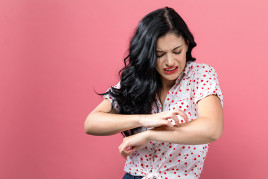
itch. While not everyone with rosacea develops itchy skin, some who
do say it feels as if the skin affected by rosacea constantly
itches. The skin also may tingle, burn, and feel hot. Touching the
affected skin often makes the itch worse.
This does not mean that you have to live with an incessant itch. A
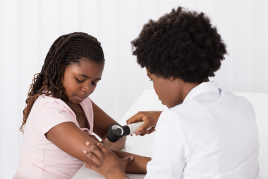
dermatologist can identify the cause and prescribe appropriate
treatment.
Causes
If rosacea itches, it is most likely caused by:
Overly dry skin. Some people notice that rosacea causes their facial
skin to become increasingly dry. Dry skin itches. It also may burn
and sting.
If you have overly dry skin, dermatologists recommend that you:
-
Tell your dermatologist. In some cases, a topical medication
prescribed for the rosacea may be causing your dry skin. Switching
medications can bring relief. A skin condition other than rosacea
also may be the culprit. A prescription salve can alleviate this
problem. If a moisturizer is needed, your dermatologist can
recommend one that does not clog pores.
-
Avoid standing or sitting next to a lit fireplace or stove. The
flames can quickly dry the skin.
-
Turn down the thermostat. Heat dries the air considerably.
-
Use a humidifier. Regular use of a humidifier can help alleviate
cracked, irritated skin when the air is dry.
-
Wash with lukewarm, not hot, water. Hot water tends to dry the
skin. After washing the face, allow the skin to air dry.
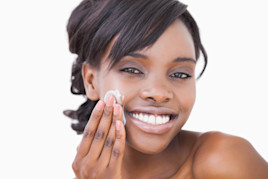
Skin care products. Harsh or overly drying skin care products can
cause the skin affected by rosacea to itch. People with subtype 1
rosacea — which is characterized by redness, swelling, and visible
blood vessels — seem most susceptible to this irritation. It is
important for people with rosacea to select skin care products that
do not cause irritation. If any skin care product — including a
medication meant to alleviate the redness of rosacea, a cosmetic, or
a sunscreen — seems to irritate your skin, let your dermatologist
know.
When shopping for over-the-counter skin care products, be sure to
read the list of ingredients before buying. According to a survey
conducted by the National Rosacea Society, products that contain
alcohol, eucalyptus, fragrance, menthol, peppermint, or witch hazel
are most likely to aggravate rosacea. Any product that causes your
skin to burn, itch, or sting should not be used.
Folliculitis. Inflammation of the hair follicles, a condition that
dermatologists call “folliculitis,” is another cause of itchy skin
in people living with rosacea. When a hair follicle becomes
inflamed, a tender red pustule usually appears. In some people with
rosacea, infection develops in these inflamed hair follicles. If you
have any of these signs, be sure to see a dermatologist for
treatment. Treating the infection often eliminates the itch.
Avoid Rubbing, Scratching, and Using Topical Corticosteroids
If your skin itches, you may be tempted to rub, scratch, or apply a
topical corticosteroid. While these can bring immediate relief, the
fact is that all of these can make matters worse. Rubbing and
scratching can increase the inflammation of folliculitis. If an
infection exists, rubbing and scratching can spread the infection to
hair follicles not yet affected. Therefore, it is important to stop
the itch as soon as it begins.
To control the itch, your first thought may be to reach for a
topical corticosteroid, such as over-the-counter hydrocortisone
anti-itch cream. While applying a topical corticosteroid (also known
as steroid, cortisone, glucocorticoid, and glucocorticosteriod) can
bring immediate relief, it is generally not lasting relief. As soon
as the topical corticosteroid is stopped, inflammation usually
returns, and the inflammation can be worse. A flare-up causes many
people to continue using the topical corticosteroid. Each time the
medication is used, the redness lessens, the itching subsides, and
the overall appearance of the skin generally improves. As soon as
the medication is stopped, the skin tends to flare.
This is a common reaction in people who have rosacea and can lead to
dependence on topical corticosteroids. Overuse of topical
corticosteroids can worsen the very condition that you are trying to
resolve — inflammation of the hair follicles. Additionally,
long-term use of topical corticosteroids can cause side effects,
such as thinning skin, stretch marks, and visible capillaries.
Long-term use of corticosteroids also has been known to worsen
rosacea.
Treatment
To control the itch of rosacea, dermatologists generally recommend
moisturizing topical antibiotics and/or pramoxine lotion. While
getting the itch under control, cool — not cold — compresses can
help as itching tends to be more severe when the skin is warm.
Moisturizing topical antibiotics. These are especially helpful when
the itch is caused by a topical product that has irritated the skin,
such as a sunscreen or a cosmetic. The antibiotic can help prevent
infections caused by bacteria. Topical moisturizing antibiotics
should only be used on the skin and only as directed.
Pramoxine lotion. This prescription medication is used to relieve
pain and itching as well as moisturize. Pramoxine lotion is
generally applied three (3) or four (4) times a day. Unlike
corticosteroids, pramoxine lotion does not worsen infection in the
hair follicles, and flare-ups have not been reported when pramoxine
lotion is stopped. This lotion should not be applied to an open
wound or blistered skin.
Whether you have been bothered by the itch of rosacea for years or
just recently noticed that your rosacea is beginning to itch, be
sure to see your dermatologist. Appropriate treatment can calm the
itch of rosacea.
Reference:
National Rosacea Society, “Ingredients May Aggravate Rosacea.”
Rosacea Review, spring 2005. Available at: http://www.rosacea.org/rr/2005/spring/article_5.html.
Last accessed: August 23, 2005.

All
content solely developed by the American Academy of Dermatology |
 |
|