








|
SkinCancerNet Article
Can We Inherit Skin Cancers Other Than Melanoma?
|
Quick
View: About 10% of people who develop melanoma inherit
genes that cause this skin cancer. Research suggests
that the remaining 90% of melanomas and all other skin cancers
are not caused by skin cancer genes. Some people,
however, inherit genes that increase their risk of developing
skin cancer. This article explains why. |
While anyone can develop skin cancer,
some people have an increased risk. The reason lies in our genes.
The risk of developing skin cancer after exposure to UV rays (from
the sun, tanning beds, etc.) increases dramatically when a person
also inherits the genes that cause:
-
Light skin, especially when the
person has light-colored hair and/or eyes
-
Basal cell nevus syndrome
(This inherited medical condition, also known as Gorlin’s
syndrome, can affect the skin, nervous system, eyes, bones, and
some glands. A person may develop numerous basal cell skin
cancers, often before age 30.)
-
Xeroderma pigmentosum
(Pronounced zeer-oh-der-ma pig-men-toe-sum, this inherited medical
condition impairs the body’s ability to repair damage caused by
exposure to UV rays.)
Why This Increased Risk
Light skin. Having light-colored skin makes a person
more susceptible to UV damage. The paler the skin, the more readily
it absorbs UV light. The more UV light that the skin absorbs, the
more damage to the skin. While the body can repair this damage, with
repeat UV exposure, the body becomes less capable of repairing the
damage. Eventually, skin cancer develops.
People with light skin who have had years of unprotected sun
exposure or used tanning devices, such as tanning beds, should learn
how to examine their skin for signs of skin cancer. They also should
be screened regularly by a dermatologist. With early detection and
treatment, even melanoma has a 95% cure rate.
Basal cell nevus syndrome. Regular skin examinations
can be lifesaving for people who inherit the genes that cause basal
cell nevus syndrome. Usually before 30 years of age, a person with
basal cell nevus syndrome will develop basal cell carcinoma, the
most common type of skin cancer. Some people develop only a few
basal cell carcinomas; others have hundreds. Most of these cancers
develop on sun-exposed skin.
Along with regular skin examinations, sun avoidance is essential for
anyone diagnosed with this medical condition. Sun avoidance
decreases the risk of developing basal cell cancers. When the sun
cannot be avoided, the person should practice comprehensive sun
protection. This includes wearing protective clothing, a
broad-spectrum (offers protection from UVA and UVB rays) sunscreen
recommended by a dermatologist, and sunglasses that protect the eyes
from harmful UVA and UVB rays.
Xeroderma pigmentosum. Sun avoidance is necessary for
everyone who inherits the genes for xeroderma pigmentosum. This
medical condition causes the person to be extremely sensitive to the
effects of UV light because the body’s ability to repair the damage
caused by UV light is absent or severely diminished. While it may
seem that this condition would only affect people with very light
skin, xeroderma pigmentosum develops in all races.
Inability to repair the damage caused by exposure to UV light gives
people with xeroderma pigmentosum a 1000-fold increased risk of
developing skin cancer. As the damage accumulates in the skin, even
brief exposure to UV light can cause skin cancer. By age 8, most
patients with xeroderma pigmentosum have skin cancer. Tumors also
frequently develop in their eyes. Without complete UV protection,
multiple skin cancers can develop. As many as 100 tumors have been
reported in a single patient.
Xeroderma pigmentosum can significantly decrease life expectancy.
Many with this condition die when a skin cancer, such as melanoma or
squamous cell carcinoma, spreads. To protect a child from UV
exposure, some families reverse their day/night cycles.
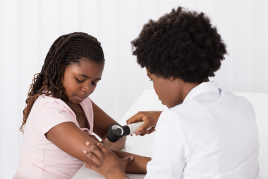
How a Dermatologist Can Help
Anyone diagnosed with basal cell nevus syndrome or xeroderma
pigmentosum should be under the care of a dermatologist. This
medical doctor receives years of medical training that focuses on
treating skin conditions.
Research shows that dermatologists more accurately detect skin
cancer than any other doctor. Treating skin cancer in its earliest
stage can prevent the tumor from growing. Delaying treatment may
require the doctor to remove a large amount of skin and tissue. This
can be disfiguring. Early treatment also has the highest cure rate.
By seeing a dermatologist, the patient and family can learn how to
perform regular self-examinations, which should be performed
frequently between office visits.
In addition to treating skin cancers, a dermatologist will work with
the patient to help prevent new skin cancers. A dermatologist can
recommend a sun-protection plan that is appropriate for the patient
as well as recommend suitable sun-protective clothing and other
products to help shield the skin and eyes from UV exposure. If a
patient has a high risk of developing numerous skin cancers, a
dermatologist may prescribe medication to help prevent new skin
cancers.
Those who have spent years in the sun or regularly used tanning beds
also should see a dermatologist regularly. Years of unprotected sun
exposure or frequent tanning-bed use significantly increase the risk
of developing skin cancer. This is especially true if you inherited
the genes for light-colored skin, hair, or eyes.
Note: An upcoming article will cover what is known
about the genes that cause melanoma.
References:
Berg D. “Nevoid Basal Cell Carcinoma Syndrome.” eMedicine. Last
update: January 25, 2007. Last accessed: February 15, 2007.
Hornstein MC et al. “Xeroderma Pigmentosum.” eMedicine. Last update:
June 8, 2005. Last accessed: February 15, 2007.
Taylor, SC. “Skin of color: Biology, structure, function, and
implications for dermatologic disease.” Journal of the American
Academy of Dermatology. 2002 February;46(2)suppl. 2:S41-S62.
Yimaz B et al. “Basal cell nevus syndrome concurrent with adenoid
cystic carcinoma of salivary gland.” Journal of the American Academy
of Dermatology. 2003 May;48(5)suppl:S64-S66.

All
content solely developed by the American Academy of Dermatology |
 |
|